This is a practical post. No metaphors. No lane marker mysticism. Just a system that works.
If you're a late-identified autistic adult, you already know the problem: you run out of person before the day runs out of hours. You come home from work and sit in the car for twenty minutes because going inside means performing for the people you love, and you've been performing for strangers all day and there's nothing left.
You call this "tired." It's not tired. Tired is what happens after exertion. This is what happens after emulation. You've been running a neurotypical operating system on autistic hardware all day, and the processor is thermal throttling.
I call it the masking energy budget. Here's how I track it.
THE BUDGET
You start each day with a number. Not a real number — you can't quantify this exactly, and anyone who tells you they can is selling something. But you can estimate. I use a 1-10 scale. Most days I wake up at a 7. Some days, a 5. After bad sleep or high-stress days, a 3. The number is how much social emulation fuel you have before the mask starts cracking.
Everything costs something:
HIGH-COST INTERACTIONS (2-3 points each):- Phone calls with strangers (insurance, dispatch, mechanics)
- Meetings with more than 3 people
- Any situation requiring sustained eye contact with someone you don't know well
- Small talk with no exit strategy
- Conflict, even minor conflict, even conflict you win
- Being "on" for someone else's emotional crisis
- Performing enthusiasm you don't feel
- Job interviews, doctor's appointments, parent-teacher conferences
- Casual conversation with acquaintances
- Ordering food (in person, not drive-through)
- Brief phone calls with known contacts
- Group settings where you can be mostly silent
- Email chains that require diplomatic tone management
- Social media engagement (yes, this counts)
- Transactional exchanges (cashier, gas station, toll booth)
- Conversation with close friends who know you're autistic
- Drive-through orders (God bless the drive-through)
- Written communication where you control the pacing
- Being around people without interacting (sitting in a diner, truck stop presence)
- Being alone
- Being with someone who requires zero performance (if you have this person, you know who they are, and you should tell them they're saving your life)
- Driving
- Reading
- Listening to music or podcasts
- Being in nature
- Being with animals
THE TRACKING SYSTEM
Every morning, I estimate my starting number. As the day goes on, I subtract. Not with a calculator — just a gut check. After a phone call with dispatch, I think: Where am I now? Was I a 7? Am I a 5? The awareness itself is the tool. You don't need to be precise. You need to be honest.
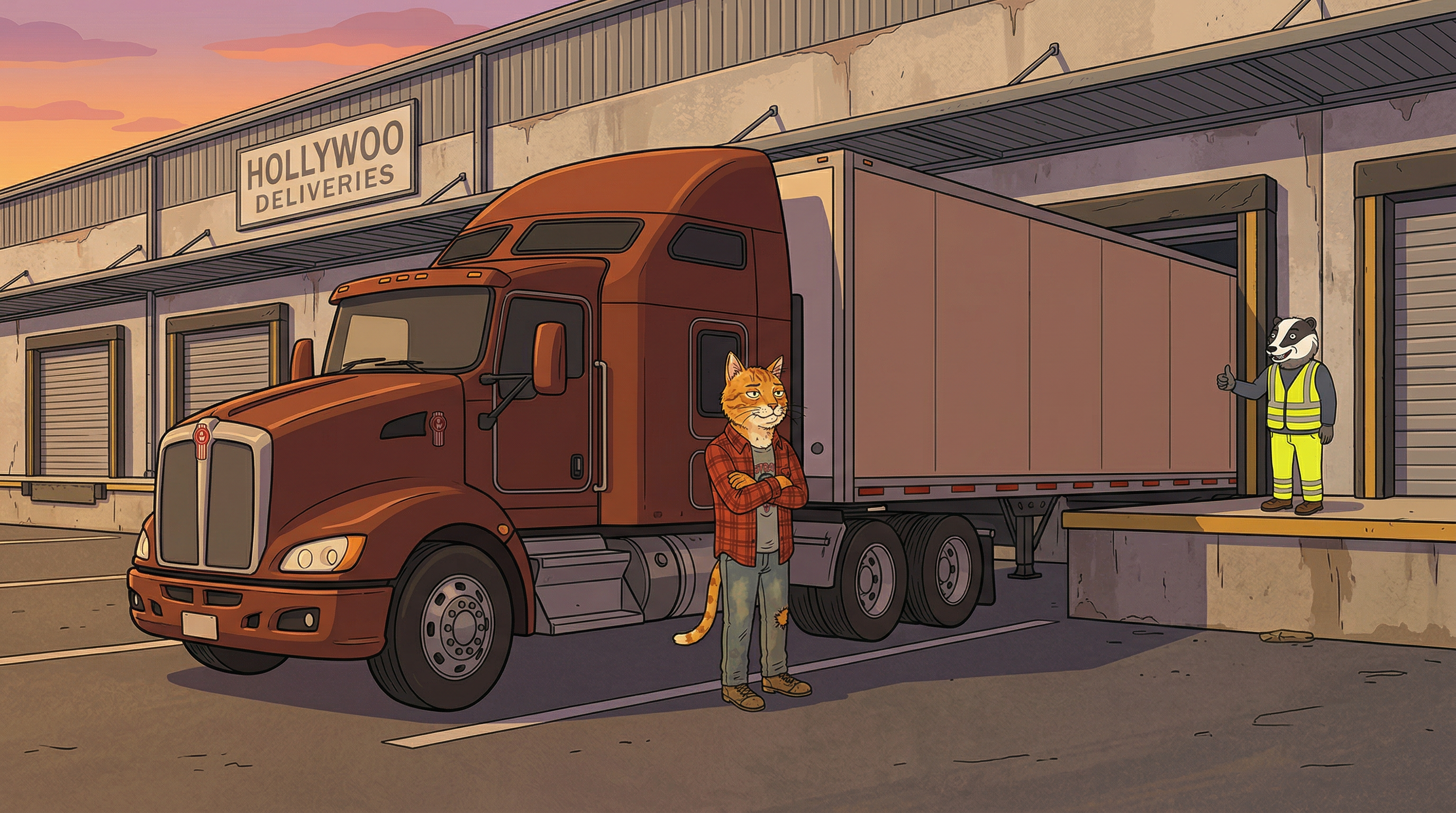
When I hit 2, I stop accepting optional social interactions. No unnecessary phone calls. No stopping to chat at the fuel island. No accepting dinner invitations. The remaining 2 points are reserved for things I can't avoid — talking to the dock worker, handling paperwork, calling Beth.
When I hit 1, I go nonverbal if possible. Not dramatically. Not performatively. I just stop initiating conversation. Most people don't notice. Most people are not paying attention to whether the truck driver is talking less than usual.
When I hit 0, the mask cracks whether I want it to or not. This is where the weird starts to show. I lose the ability to modulate my facial expression. My voice goes flat. My responses get shorter and more literal. People think I'm angry. I'm not angry. I'm depleted.
Going below zero is real. It's energy debt. You borrow from tomorrow. A -2 day means you start the next day at 5 instead of 7. Three -2 days in a row means you start Thursday at a 1 and you haven't left the truck yet and you're already done.This is how burnout happens. Not all at once. Point by point. Interaction by interaction. A slow bleed that you don't notice until you're at -5 and you can't remember what your personality is supposed to look like.
THE RECOVERY SYSTEM
You can't manufacture energy. You can only protect it and let it regenerate.
Active recovery (adds 1-2 points):- 30 minutes completely alone, no input
- A familiar playlist, driving a familiar route
- A special interest deep-dive (for me: patterns, books, maps)
- Physical movement with no social component (walking, not gym)
- Cooking, if you find it meditative. I don't, but some people do.
- Being in a low-demand environment (truck stop diner, quiet bar, library)
- Being with a safe person who doesn't require performance
- Stimulus reduction (dim lights, no music, no screens)
- "Relaxing" in a social setting (a party is not rest)
- Watching TV that requires emotional processing (drama, news)
- Doom-scrolling (your brain is still processing social information)
- Alcohol (feels like it helps, actually reduces tomorrow's starting number)
- Telling yourself to "just push through it" (you're not tired, you're depleted, and willpower is not a substitute for fuel)
THE HARD PART
The hard part is not the system. The system is easy. A child could understand it: you have a number, things cost points, when you're low you stop spending.
The hard part is that the world doesn't know your number.
Your boss doesn't know that the morning meeting cost you 3 points and you're running the rest of the day on fumes. Your partner doesn't know that you used your last point on a polite conversation with the neighbor and now you have nothing left for the "how was your day" exchange. Your friends don't know that canceling plans isn't rudeness — it's bankruptcy.
And you can't explain it. Not really. You can say "I'm an introvert" and people nod, but introversion is preference. This is arithmetic. The number is the number. When it's zero, it's zero, and no amount of wanting to be a good partner or a good friend or a good employee changes the math.
What I do:I tell people close to me the number. Not the whole system — that's a lot for someone to absorb. Just the number. "I'm at a 2 today." Beth knows what that means. It means: I love you, and I need to not be a person for a while. It means: don't take the flatness personally. It means: I'll be back when the number is back.
If you have someone you can give your number to, give them your number.
If you don't have someone yet, give the number to yourself. Say it out loud if you have to. "I'm at a 2." The awareness is not a cure. But it's a map. And a map doesn't make the terrain easier. It just keeps you from being surprised when the cliff arrives.
ADDENDUM: THE TRUCK ADVANTAGE
I drive a truck. This is relevant. The truck is the closest thing to a cheat code that the masking energy budget allows.
Driving is free. It costs zero points. The cab is a private room that moves. Most of my day is spent in a zero-cost activity. My high-cost interactions are clustered — fuel stops, dock workers, dispatch calls — and then I'm alone again for hours.
I didn't become a truck driver because I'm autistic. I became a truck driver because I liked driving and I needed work. But I stayed a truck driver because the energy budget works here in a way it never worked anywhere else.
Not everyone has a truck. But everyone has something that costs zero. Find the thing that costs zero. Build as much of your day around it as the world will allow.
The thing that costs zero is your I-70. And I've already written about that.
Next time: Pattern Log #002 — on the specific pitch frequencies of vending machines by brand, and whether the Coca-Cola company is aware they're broadcasting in B-flat.